Operators told to invest in frontline teams to fix operational gaps
Even small communication gaps can multiply very quickly.
Operational complexity is rising across Asia’s QSR sector, and how brands manage frontline teams and execution today will determine who wins tomorrow.
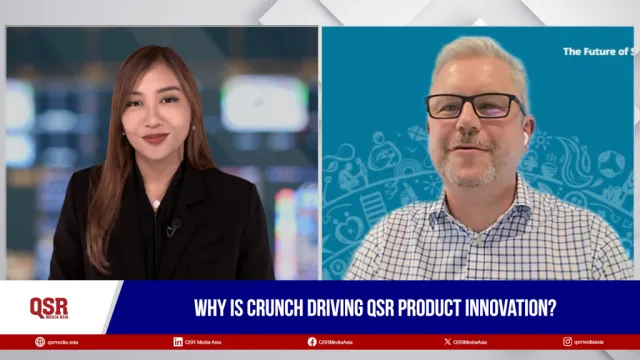
Ahead of the QSR Media Asia Conference & Awards 2026, Mark Dembitz, General Manager for Asia Pacific at Lark, shared his thoughts on what he believes are the biggest challenges for operators and where they should invest their focus next.
What are the most important shifts you are seeing in QSR operations in Asia right now, and what is driving them?
From what we’ve seen working with many QSR brands across the region, one of the biggest shifts is just how operationally complex the business has become. Most brands today aren’t just running restaurants — they’re managing dine-in, delivery platforms, loyalty campaigns, and frequent menu launches, not for one or two outlets, but across dozens or even hundreds of stores.
What that means in practice is that decisions made at HQ need not only to be executed very quickly on the store floor but also consistently and independently throughout the whole operation. The biggest challenge for operators today isn’t strategy, it’s how effectively they can coordinate operations across the entire organisation.
So we’re seeing more QSR companies investing in systems that connect HQ and frontline teams, creating one single operational environment, ensuring communication, task execution, and reporting all happen in the same place, thus gaining more operational speed and accuracty.
Where are QSR operators consistently making mistakes, and what would you advise them to do differently?
One mistake we often see across many F&B businesses is that frontline teams get deprioritised, usually because turnover is high and hiring is difficult. But that mindset can actually make the problem worse. If you resign yourself to the idea that frontline staff are short-term workers who come and go — and therefore limit your investment in them — it only worsens the problem and can eventually hurt your brand experience.
The operators who are getting this right are taking the opposite approach. They’re investing more in empowering their frontline teams — giving them the tools, context, and communication channels to feel connected to the business. Because in QSR, frontline workers are crucial: they don't just execute tasks. They’re the eyes and ears on the ground, the ones feeling the customer pulse and the ones delivering brand experience every single day.
Which costs or risks are increasing fastest for QSR operators this year, and how are the most successful companies responding?
From our conversations with QSR operators, labour and supply costs are obviously top of mind. But operationally, one of the biggest risks we see is actually execution inconsistency across the store network.
When you have hundreds of outlets, even small communication gaps can multiply very quickly. A promotion might not be implemented the same way across stores, or an operational issue might take too long to surface at HQ.
The companies that are handling this best are focusing on improving visibility across their store network. This means, of course, making sure leadership can see what’s happening on the ground, while store teams can easily report issues or updates. But also, ensuring the ability for staff to share best practices across stores quickly and efficiently, accelerating iteration, ideation and improvements across store networks. That kind of real-time feedback loop really helps organisations move faster.
What does excellence look like in QSR execution today, and what signals indicate a business is performing exceptionally?
From what we’ve observed working with high-performing brands, operational excellence really comes down to alignment between HQ and the frontline.
Most organisations think about this as a one-way street, where updates and instructions from HQ reach stores quickly, and good organisations make sure that operational tasks are structured clearly, with leadership having visibility across the entire network.
The very best organisations, however, see HQ-Frontline alignment as a two-way street: not only does the corner office distribute instructions and tasks, but frontline teams are actively part of the feedback loop: store managers can quickly report issues, share ideas and highlight operational challenges.. This way, data & insights flow up instantly, enabling frontliners to observe, test, and ultimately play an integral role in innovating and transforming the business.
When that connection between HQ and the store floor is strong, the whole organisation becomes much more responsive.
Looking ahead 12 months, what are your three most defensible predictions for QSR in Asia, and which indicators will tell you if they’re on track?
Based on what we’re seeing from the brands we work with, three trends stand out. First, we expect more consolidation of operational tools. Many operators are realising that running operations across too many separate systems creates friction. Second, we expect greater attention to shift toward empowering frontline teams. Brands are recognising that store execution is where many operational wins or losses actually happen. And third, we expect speed of execution, innovation & adaptation to customer needs will become an even bigger competitive advantage.
More than ever, it will be the fast that eat the slow, not the big that eat the small. The brands that deploy a mindset and tooling that help them listen more closely to their customers and roll out the required changes faster by democratizing innovation across the workforce and coordinating their teams more effectively will be the ones that attract and retain the best talent and continue to scale successfully.